Do Grandparents Have Visitation Rights?
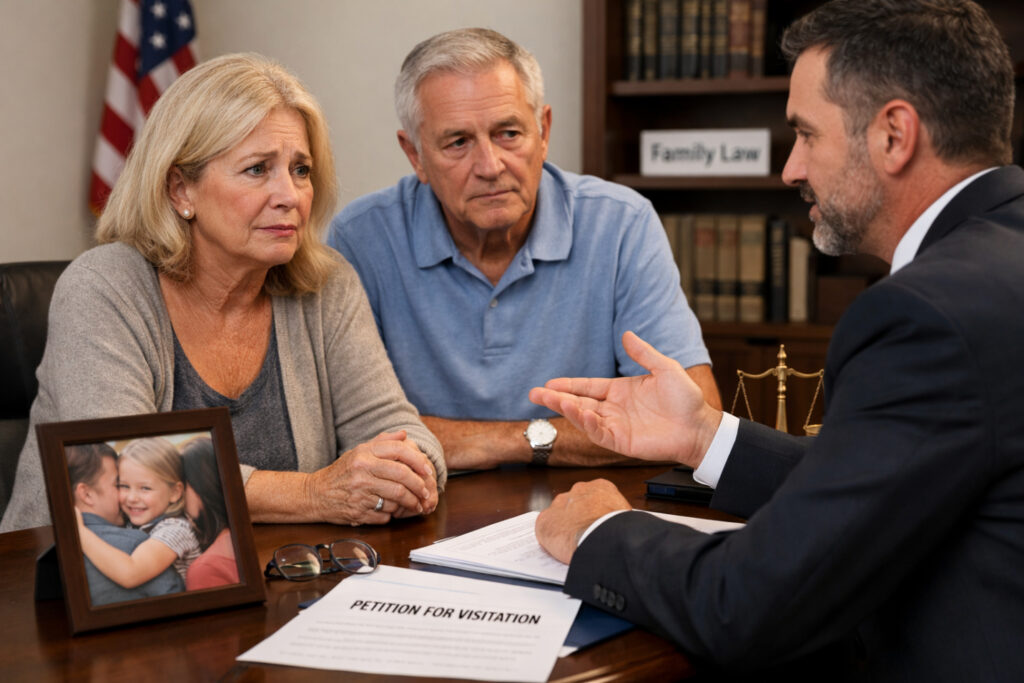
If you are a grandparent in Lakewood Ranch, Sarasota, Bradenton, or Venice, Florida, and you have been denied contact with your grandchild, you may be asking whether you have legal rights to visitation. Florida law gives parents very strong authority over who may spend time with their children. Because of that, your rights as a grandparent are limited and only apply in specific and serious circumstances.
Grandparent visitation in Florida is governed primarily by Florida Statutes § 752.011, along with other provisions in Chapter 752. These laws are narrow. If your situation does not clearly fall within the statute, a court in Manatee County or Sarasota County, Florida will not grant visitation—even if you believe continued contact would benefit your grandchild.
Before filing anything in court, you need to understand whether you qualify under Florida law and whether you can meet the required burden of proof.
Why Florida Strongly Protects Parental Rights
Florida courts recognize that parents have a fundamental constitutional right to raise their children without unnecessary government interference. This right includes deciding who may and may not have contact with their child. Because of this strong legal protection, courts are extremely cautious about ordering grandparent visitation over a parent’s objection.
If a parent is legally fit, the court will usually defer to that parent’s decision. This principle applies whether the parents are married, divorced, separated, or were never married. Divorce alone does not give grandparents visitation rights.
For you, this means the court will not intervene simply because you have a close relationship with your grandchild or believe visitation is in the child’s best interests. The law requires much more.
When You May Petition Under Florida Statutes § 752.011
Florida Statutes § 752.011 outlines the limited circumstances in which you may file a petition for grandparent visitation. Under this statute, you may petition the court if both parents of the child are deceased, missing, or in a persistent vegetative state.
You may also petition if one parent is deceased, missing, or in a persistent vegetative state and the other parent has been convicted of a felony or an offense of violence that demonstrates behavior posing a substantial threat of harm to the child’s health or welfare.
These are very specific and serious conditions. A strained relationship with your adult child does not qualify. Disagreements about parenting decisions do not qualify. Being excluded after a divorce does not qualify. If your case does not fall squarely within these statutory categories, the court does not have authority under Chapter 752 to grant visitation. A Lakewood Ranch, Bradenton, Venice, and Sarasota family law attorney can evaluate whether you have standing to file.
Understanding “Missing” and “Persistent Vegetative State”
The terms used in Florida Statutes § 752.011 are not casual descriptions. A parent is not considered “missing” simply because they are uninvolved or out of contact for a short time. Legal standards under Florida Statutes § 752.001 must be met regarding the parent’s unknown whereabouts.
Similarly, a “persistent vegetative state” generally requires medical documentation establishing that the parent is permanently unconscious and unable to make decisions. Courts require clear and reliable evidence before they will allow a case to proceed.
If you believe one of these conditions applies in your family, documentation and legal review are critical.
The Substantial Harm Requirement
Even if you meet the eligibility requirements under Florida Statutes § 752.011, you must still satisfy another major legal requirement. The court must find, by clear and convincing evidence at a final hearing, that the parent is unfit or that the child is suffering significant harm or is at substantial risk of significant harm if visitation is denied.
This is a very high burden of proof. It is not enough to show that the child misses you. It is not enough to show that you have a strong bond. It is not enough to argue that continued contact would benefit the child emotionally.
You must show real, measurable harm or a serious risk of harm. Courts do not grant visitation lightly because doing so interferes with a parent’s fundamental rights.
If you cannot meet this standard, your petition will be denied.
Temporary Relief Under Florida Statutes § 752.011
Florida Statutes § 752.011 also allows for temporary relief in certain situations while the case is pending. However, even temporary visitation requires the court to find that there is a substantial likelihood that the grandparent will ultimately prevail in proving parental unfitness or significant harm to the child.
Temporary visitation is not automatic. The court will carefully evaluate the evidence before granting any time-sharing while the case proceeds.
Mediation Under Florida Statutes § 752.015
Florida law also requires courts to encourage mediation in grandparent visitation disputes. Under Florida Statutes § 752.015, if a petition is filed and mediation services are available in the circuit, the court must refer the case to family mediation. This reflects Florida’s public policy favoring resolution of visitation issues within the family whenever possible.
What If the Parents Are Divorced in Bradenton, Sarasota, or Venice, Florida?
Many grandparents in Bradenton, Sarasota, and Venice, Florida assume that if their grandchild’s parents are divorced, they can ask the court for visitation as part of the family court process. Florida law does not allow that unless the specific conditions in Florida Statutes § 752.011 are met.
A divorce case between the parents does not give you independent rights. Unless the statutory requirements are satisfied, the court will not order visitation simply because the family structure has changed.
If you believe a child is in danger, other legal options may exist, such as dependency proceedings or custody-related actions. Those are separate legal matters and require careful review of the facts. They are not automatic substitutes for grandparent visitation under Chapter 752.
The Legal Process in Manatee County and Sarasota County, Florida
If you qualify under Florida Statutes § 752.011, you would file a petition in the Circuit Court for Manatee County or Sarasota County, which is part of the Twelfth Judicial Circuit. Your petition must clearly state the legal basis for your claim and include factual allegations supporting eligibility and substantial harm.
The parent or parents who are served notice of the petition under Florida Statutes § 752.02 will have the right to respond and challenge your claims. The court may hold evidentiary hearings. You will likely need documentation, witness testimony, and possibly expert evidence to support your case.
Because the burden of proof is high and the statute is narrowly interpreted, careful preparation is essential. Filing without meeting the statutory requirements can result in dismissal and additional legal expenses.
Effect of Stepparent or Relative Adoption Under § 752.071
If a stepparent or close relative later adopts your grandchild, Florida Statutes § 752.071 allows the adoptive parent to petition the court to terminate any existing grandparent visitation order entered under Chapter 752. The court may terminate the visitation unless the grandparent can show that the requirements of Florida Statutes § 752.011 are still satisfied. This means that even court-ordered visitation is not necessarily permanent after certain adoptions.
Why You Need a Lakewood Ranch, Bradenton, Sarasota, and Venice, Florida Family Law Attorney
Grandparent visitation cases are legally complex and emotionally charged. The statute is narrow. The evidentiary standard is demanding. The constitutional issues involved make courts cautious.
If you attempt to handle this alone, you risk filing a petition without legal standing or failing to meet the substantial harm requirement. An experienced Lakewood Ranch, Bradenton, Sarasota, and Venice, Florida family law attorney can review your situation, determine whether you qualify under Florida Statutes § 752.011, assess the strength of your evidence, and advise you about realistic outcomes.
Your relationship with your grandchild is deeply personal. But in court, your case must be built on law and evidence—not emotion alone.
Protecting Your Rights and Your Relationship
Florida law does not provide broad visitation rights to grandparents. Instead, it allows court involvement only in limited and serious circumstances. If your family situation involves death, disappearance, severe incapacity, or serious criminal conduct combined with harm to the child, you may have a legal pathway forward.
Every case is fact specific. Small differences in circumstances can change whether you qualify. Before taking action, you should understand your legal rights, your risks, and your options under Florida law.
Contact a Lakewood Ranch, Bradenton, Sarasota, and Venice, Florida Grandparent Visitation Divorce Lawyer Today
If you are a grandparent who has an adult child going through a divorce in Bradenton, Sarasota, or Venice, Florida and who has been denied contact with your grandchild, do not try to navigate Florida’s strict visitation laws alone. You need clear advice about whether you qualify under Florida Statutes § 752.011 and whether you can meet the substantial harm standard required by the court.
Contact a Lakewood Ranch, Bradenton, Venice, Florida and Sarasota family law lawyer at the Law Offices of Matthew Z. Martell, P.A. by calling (941) 556-7020 or contacting us online to see if you qualify for our 15-minute free initial consultation by phone. Please remember that we are very selective about the clients and cases that we accept and that this would need to be done in conjunction with an existing divorce case, or one where it is or immediately transferred to us, where we represent your adult child and he/she also waives any potential conflict of interest in writing in order at the commencement of legal representation for us to agree to represent you. Thank you!