What Evidence Do I Need for a Custody Case in Florida?
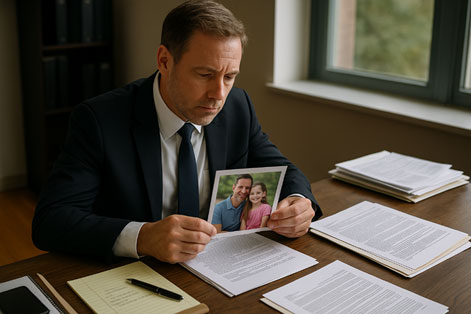
When you are facing a child custody dispute in Lakewood Ranch, Bradenton, Sarasota, Siesta Key, or Venice, Florida, one of the most important things you can do to protect your parental rights is to gather the right evidence. The court will decide who gets custody based on the best interests of your child, as required by Florida Statutes § 61.13. This means the judge will look closely at the facts you present, not just your opinions. Whether you are seeking sole custody, shared parental responsibility, or changes to an existing arrangement, the quality of your evidence can make all the difference.
In this article, you will learn what types of evidence Florida family courts consider, how to document your relationship with your child, and how to prepare for your custody case with the help of a Lakewood Ranch, Bradenton, Sarasota, and Venice, Florida family law lawyer near you, such as Attorney Matthew Z. Martell.
Understanding the Legal Standard in Florida Custody Cases
Under Florida Statutes § 61.13(2)(c), the court determines custody—referred to as “parental responsibility” and “time-sharing”—based on what serves the child’s best interests. This standard involves evaluating multiple factors, such as each parent’s ability to provide a stable home, promote the child’s welfare, and cooperate with the other parent.
Evidence must speak directly to these factors. The judge wants proof that you can meet your child’s emotional, educational, physical, and developmental needs. You do not need to be a perfect parent, but you must demonstrate that you can provide a safe and supportive environment for your child.
Types of Evidence Commonly Used in Florida Custody Cases
Every custody case is unique, but most share certain types of evidence that can strengthen your position. Courts rely on documentation, testimony, and expert reports to understand each parent’s role in the child’s life.
1. Parenting Records and Communication Logs
One of the most persuasive forms of evidence involves detailed records of your involvement in your child’s daily life. Keep logs of your parenting time, including school drop-offs, extracurricular activities, doctor’s visits, and other involvement. This helps the judge see how active you are as a parent.
Text messages, emails, and parenting apps can also serve as valuable records of communication between you and the other parent. These communications can demonstrate your willingness—or the other parent’s unwillingness—to cooperate for the benefit of your child, a key factor under § 61.13(3)(a) and (3)(c).
2. School and Medical Records
The court often examines the child’s educational and medical records to determine stability and care quality. Report cards, attendance records, notes from teachers, and therapy reports can show how your child is doing academically and emotionally. Medical records may show who takes the child to appointments and follows through with medical care, which reflects parental responsibility and attentiveness.
3. Witness Testimony
Teachers, coaches, neighbors, relatives, and childcare providers can all serve as witnesses to your parenting and your child’s well-being. Testimony from these neutral third parties often carries significant weight because it provides an objective view of your relationship with your child.
If you believe the other parent poses a risk, witnesses who can describe specific behaviors—such as neglect, verbal abuse, or substance misuse—can be crucial. Always discuss with your attorney which witnesses are most appropriate and credible for your case.
4. Photographs, Videos, and Social Media Evidence
Photos and videos showing positive parenting interactions can help demonstrate your involvement and bond. However, social media can also work against you. Courts in Florida increasingly allow social media posts as evidence in custody cases. If your posts—or the other parent’s posts—contradict courtroom testimony or show poor judgment, they may influence the outcome. Always consult your lawyer before using or submitting this type of evidence.
5. Financial Documentation
Custody decisions often include child support considerations. Providing evidence of your financial stability—such as pay stubs, tax returns, and housing expenses—shows that you can meet your child’s basic needs. Florida courts may also review how each parent allocates money for the child’s benefit, per Florida Statutes § 61.30, which governs child support.
Proving the “Best Interests of the Child” Under Florida Law
The “best interests” test is the foundation of every Florida custody case. Florida Statutes § 61.13(3) lists more than 20 factors that courts consider. Some of the most relevant include:
- The demonstrated capacity of each parent to encourage a close and continuing parent-child relationship.
- The ability to provide a consistent routine for the child.
- The mental and physical health of each parent.
- Evidence of domestic violence, abuse, or neglect.
- The moral fitness of the parents.
- The reasonable preferences of the child, depending on age and maturity.
Evidence should relate directly to these statutory factors. For instance, if you claim the other parent is unreliable or unfit, you will need clear documentation, not just allegations. Police reports, court documents, or prior Department of Children and Families (DCF) investigations can be powerful evidence if they exist.
How to Organize and Present Evidence
Gathering evidence is only the first step; organizing and presenting it effectively is equally important. Your Lakewood Ranch, Bradenton, Sarasota, and Venice, Florida family lawyer, Attorney Matthew Z. Martell, will help you prepare exhibits, subpoenas, and witness lists to ensure your case is presented clearly.
Courts prefer evidence that is factual, chronological, and easy to follow. A written timeline summarizing major events—such as changes in the child’s behavior, incidents of missed visitation, or communications about parenting disputes—can be very persuasive. Be consistent and honest; judges quickly notice when a parent exaggerates or withholds information.
It is also wise to avoid speaking negatively about the other parent in front of your child or in public forums. The court evaluates your willingness to foster a positive relationship between the child and the other parent, as outlined in § 61.13(3)(a). Negative comments or interference with visitation could harm your credibility.
The Role of Experts in Custody Cases
In some custody disputes, expert evaluations can be decisive. A child psychologist, guardian ad litem, or parenting coordinator may be appointed to assess the family dynamic and make recommendations to the court. These professionals gather their own evidence through interviews, observations, and reports.
Under Florida Statutes § 61.401, courts may appoint a guardian ad litem when there are allegations of abuse, neglect, or high conflict. Their findings often carry significant weight because they represent the child’s best interests rather than either parent’s wishes.
If you disagree with an expert’s findings, your lawyer can help challenge their report through cross-examination and by presenting alternative expert testimony. Evidence that contradicts or clarifies the expert’s opinion can sometimes sway the court’s final decision.
What Not to Do When Gathering Custody Evidence
Just as the right evidence can strengthen your case, the wrong kind can damage it. Avoid illegally recording the other parent without consent, as Florida’s wiretapping laws (under Florida Statutes § 934.03) prohibit recording private conversations without all parties’ permission. Illegally obtained evidence is inadmissible and could expose you to legal penalties.
Do not coach your child on what to say or pressure them to take your side. Judges can often tell when a child’s statements are rehearsed or influenced. Instead, focus on demonstrating your consistent, positive parenting and your ability to support your child’s emotional health.
Lakewood Ranch, Bradenton, Sarasota, and Venice, Florida Custody Lawyer
Custody cases are among the most emotionally charged and legally complex matters in Florida family law. Understanding what evidence the court values and how to present it effectively can make a significant difference in the outcome. Whether you are negotiating a parenting plan, seeking a modification of custody, or preparing for trial, an experienced Lakewood Ranch, Bradenton, Sarasota, and Venice, Florida family law attorney near you can help protect your parental rights and your child’s well-being.
The Law Offices of Matthew Z. Martell, P.A. focuses on helping parents navigate child custody, child support, and other family law issues during a divorce with skill and compassion. This law firm understands the importance of evidence in building a compelling case and can guide you through each step of the legal process.
If you are facing a custody dispute or need advice about your parental rights during a divorce, contact a Lakewood Ranch, Bradenton, Siesta Key, and Sarasota child custody lawyer such as Attorney Matthew Z. Martell by calling (941) 556-7020 or contacting us online to see if you qualify for our 15-minute Free Initial Phone Consultation. Acting early in your divorce can help you understand your legal options and position your case for the best possible outcome.