How Does Retroactive Child Support Work in Florida?
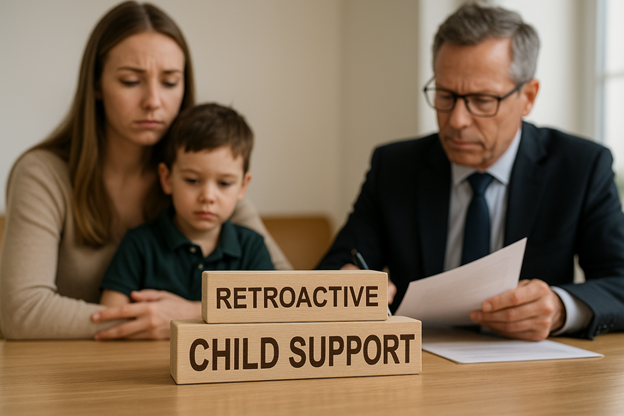
If you are a parent in Lakewood Ranch, Bradenton, Sarasota, Siesta Key, or Venice, Florida dealing with child support issues, you may have heard the term “retroactive child support.” It refers to child support that covers a period of time before a formal child support order is entered by the court. This situation commonly arises when one parent has been supporting the child on their own, and the other parent has not yet been ordered to contribute financially. Understanding how retroactive child support works in Florida can help you know your rights, responsibilities, and options when seeking or defending a child support claim.
Florida law provides detailed guidance on when and how retroactive child support can be awarded. The law aims to ensure that children receive the financial support they need, regardless of when a parent begins paying it.
Legal Basis for Retroactive Child Support
The rules governing retroactive child support are found in Florida Statutes § 61.30(17). This section of the law allows a court to order retroactive child support. The obligation can date back to the date when the parents stopped living with each other or up to 2 years before the filing date of the petition for child support, whichever is later.
That means, for example, if you and the other parent separated three years ago, but the child support case was only filed six months ago, the court can only go back up to 24 months from the date the petition was filed — not all the way to the date of separation. This 24-month limit is designed to balance fairness for both parents while ensuring the child receives appropriate financial support.
However, courts also have discretion in determining the appropriate time frame for retroactive support. They may consider the circumstances of each case, such as when the need for support arose, whether the paying parent had notice of the child’s needs, and the ability of both parents to pay during the retroactive period.
How Florida Courts Calculate Retroactive Child Support
When determining how much retroactive child support should be paid, the court uses the same guidelines that apply to ongoing child support orders, as laid out in Florida Statutes § 61.30. These guidelines consider factors such as:
- The income of both parents
- The number of children involved
- Childcare and health insurance costs
- The amount of time each parent spends with the child
For retroactive support, the court looks at the actual incomes of both parents during the retroactive period, not just their current earnings. If accurate income information is not available, the court may estimate income based on employment history, qualifications, or available evidence.
Additionally, credit may be given to the paying parent for any voluntary payments or direct expenses made during that time, such as paying for rent, groceries, or school expenses for the child. These credits are typically deducted from the total amount of retroactive support owed.
The Role of Temporary Support Orders
Sometimes, a temporary child support order is issued while a family law case is pending. Temporary support covers the period from the filing of the petition to the final court order. Retroactive child support, however, usually covers the period before the case was filed.
In many situations, both temporary and retroactive child support can apply. For instance, a parent may owe temporary support from the date of filing forward and retroactive support for up to 24 months before the filing date. It is important to distinguish between these periods because they are calculated separately and may affect the final judgment amount.
Interest and Payment Plans for Retroactive Support
Florida courts also have authority to order interest on retroactive child support. While interest is not automatic, it can be applied if there is a significant delay between the time support was due and when it is paid. The court uses Florida’s statutory interest rates to calculate this amount.
In many cases, the total amount of retroactive child support can be substantial. To make repayment manageable, courts often allow the paying parent to make installment payments over time. The court will set a monthly payment amount that includes both current support and a portion of the retroactive arrears until the balance is paid off.
When Retroactive Child Support May Be Reduced or Denied
Not every case results in a full award of retroactive child support. Florida courts have discretion to limit or deny retroactive support under certain circumstances. For example:
- If the receiving parent delayed filing for child support for an extended period without justification
- If the paying parent had been contributing voluntarily or providing other forms of support
- If the paying parent’s financial circumstances during the retroactive period made payment impossible or unreasonable
The goal of the court is to achieve equity and fairness between both parents while ensuring that the child’s needs are met.
Evidence You Will Need
To establish or defend against a claim for retroactive child support, documentation is key. You will need evidence such as:
- Proof of income (tax returns, pay stubs, W-2s)
- Records of any voluntary payments made for the child’s benefit
- Receipts for child-related expenses like daycare, health insurance, or schooling
- Bank statements and financial disclosures
Both parents must provide accurate financial affidavits as required under Florida Family Law Rule of Procedure 12.285. The court relies heavily on these documents to make a fair and accurate determination of retroactive support.
Modifying or Enforcing Retroactive Child Support
Once a retroactive child support order is entered, it is legally binding. If the paying parent fails to make payments, the recipient can file a motion for enforcement or contempt. The court may then take enforcement actions such as income withholding, license suspension, or even fines.
Retroactive support can also be modified in limited circumstances. For example, if the court later finds that there was a significant misrepresentation of income or a material mistake in the calculation, a motion to modify or correct the judgment may be filed. However, modifications are generally not granted just because a parent’s financial situation changes after the order is entered.
The Importance of Legal Representation
Navigating the legal process for retroactive child support in Manatee County and Sarasota County, Florida can be complex. Calculating the correct time frame, documenting income, and ensuring that credits and expenses are accurately accounted for requires knowledge of both the law and the court’s procedures. Having an experienced Lakewood Ranch, Bradenton, Venice, Siesta Key, and Sarasota family law attorney on your side can make a significant difference in the outcome of your case.
Your lawyer can help you file the proper petitions, negotiate fair payment arrangements, and ensure that all relevant evidence is presented effectively. Whether you are seeking retroactive support or defending yourself against it, legal guidance is essential to protect your financial interests and the well-being of your child.
Lakewood Ranch, Bradenton, Sarasota, Siesta Key, and Venice, Florida Child Support Lawyer
If you are facing issues with retroactive child support or any other family law matter, it is important to speak with a knowledgeable and experienced Lakewood Ranch, Bradenton, Sarasota, Siesta Key, and Venice, Florida child support lawyer near you who can guide you through the process and advocate for your rights. At the Law Offices of Matthew Z. Martell, P.A., we understand how stressful and emotional child support cases can be. Our firm focuses on divorce matters in Lakewood Ranch, Bradenton, Sarasota, and Venice, Florida, and surrounding areas in Manatee County and Sarasota County — providing personalized representation tailored to your specific situation.
We can help you understand your rights under Florida Statutes § 61.30, assess whether retroactive support applies in your case, and represent you in negotiations or court proceedings. Do not try to handle these complex legal issues on your own — professional legal help can make all the difference.
To learn more about how our Lakewood Ranch, Bradenton, Venice, Siesta Key, and Sarasota child support lawyers can assist you, contact the Law Offices of Matthew Z. Martell, P.A. by calling (941) 556-7020 or contacting us online to see if you qualify for our 15-minute Free Initial Phone Consultation. We are here to help you protect your legal rights and ensure your child receives the support they deserve.